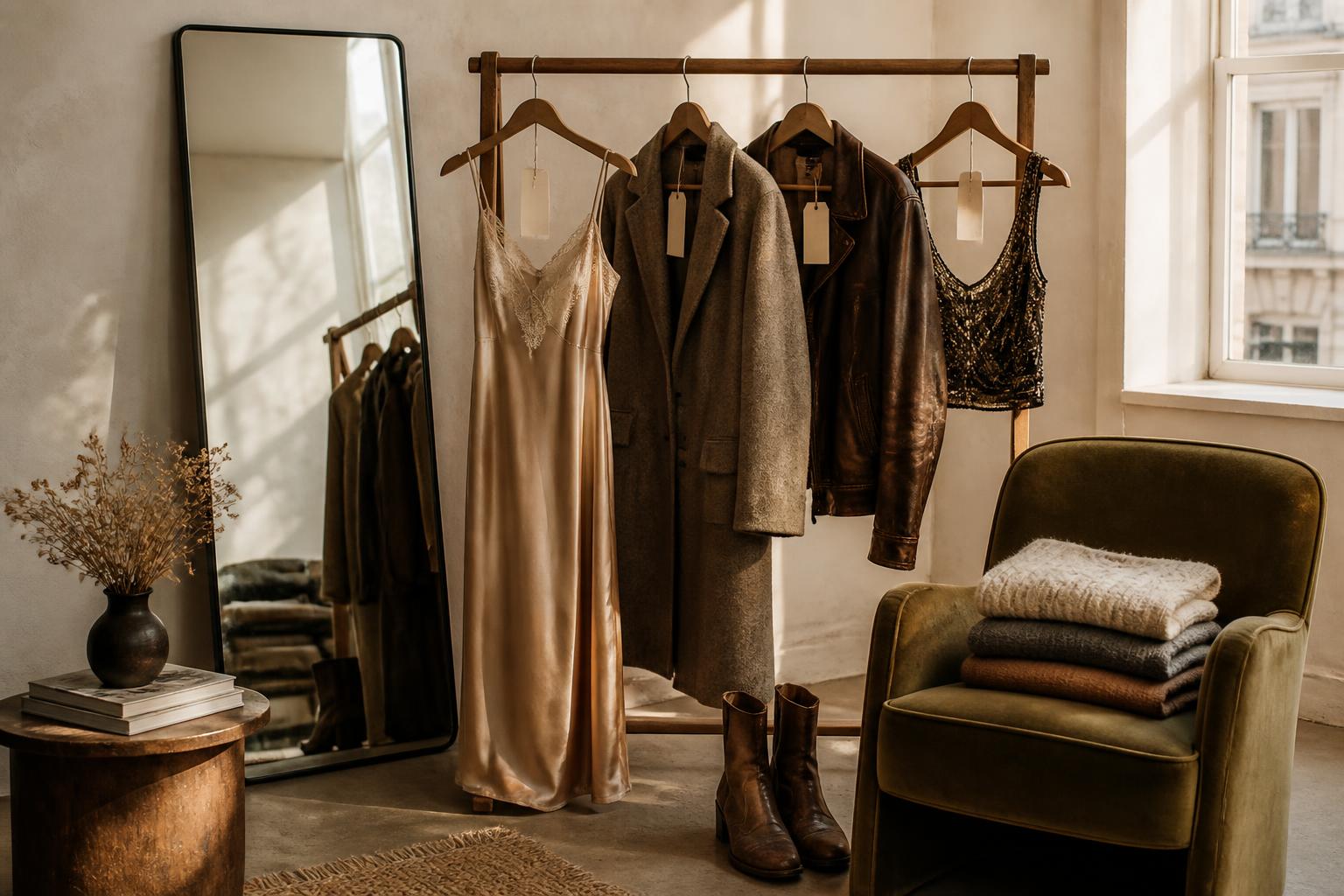
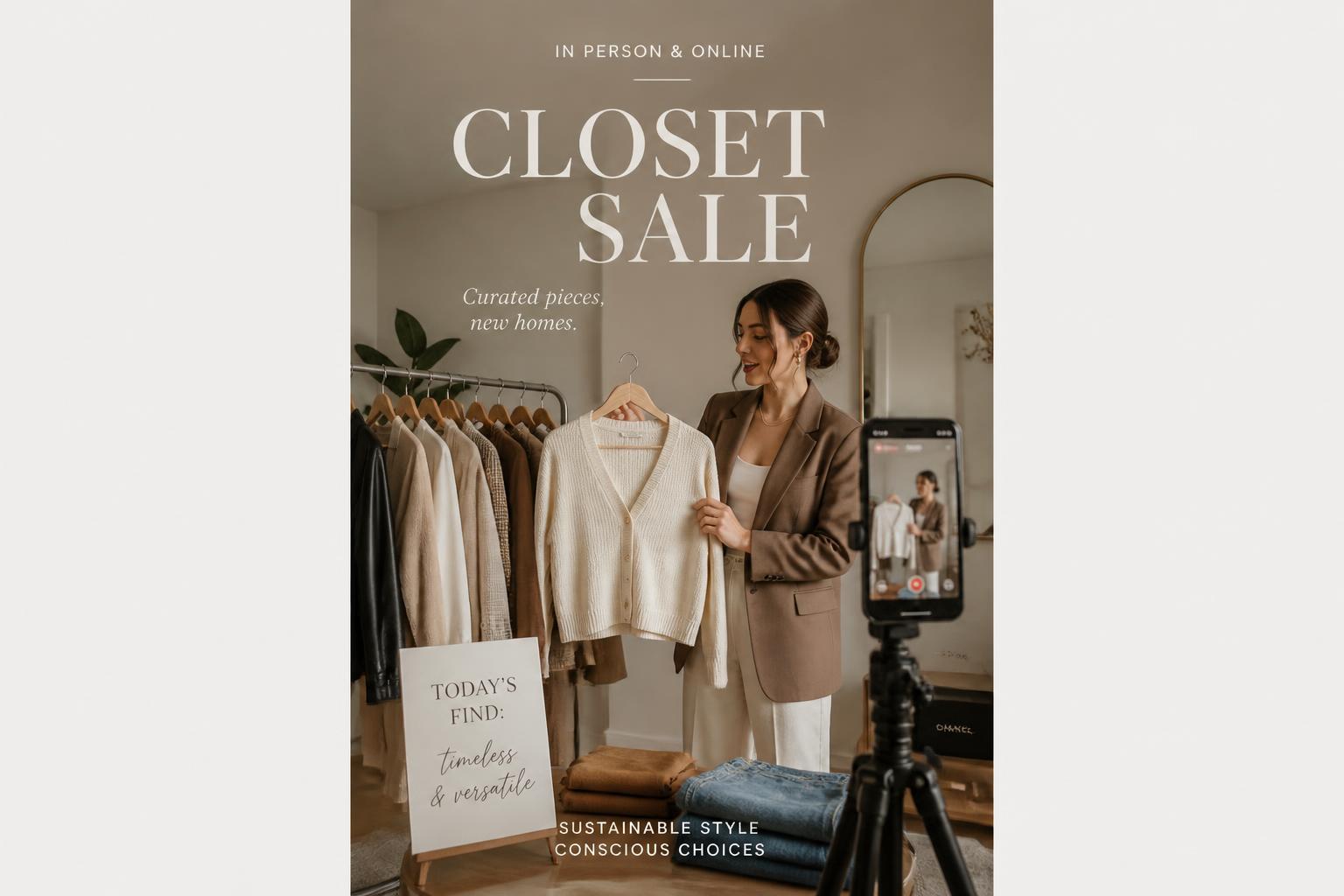
A great closet sale is part inventory drop, part editorial moment. Whether you are clearing out a season, selling pieces from a brand campaign, or hosting an in-person event with other creators, the goal is the same: turn pieces you no longer wear into a clean, shoppable experience your audience actually shows up for.
This guide is a modern playbook for hosting a fantastic closet sale in 2026 — online, in person, or both. It is written for creators, influencers, microcreators, stylists, and resellers who want their closet sale to feel like a drop, not a yard sale.
Turn this guide into your next drop.
What makes a closet sale actually work
The closet sales that perform best share five things: a curated edit, clear pricing, a single link, good photos, and a real reason for followers to show up on a specific day. Everything else is optional.
- A focused edit — 20 strong pieces beats 200 random ones.
- One link your audience can share — not a maze of DMs and screenshots.
- Clean photos shot in consistent light, on a body or a hanger.
- Honest pricing, sizing, and condition notes.
- A clear window — a launch time, a drop date, or an in-person afternoon.
Loovly was built around this exact workflow: one creator closet link, AI-assisted listing drafts from photos, and buyer interest capture so you know what people actually want before anything ships.
1. Plan the sale like a small drop
Treat the sale as a mini collection. Decide on a theme — “summer cleanout,” “press pieces,” “gifted but never worn,” “studio archive,” “vintage favorites.” A theme gives your closet a story, helps you write better captions, and makes followers feel like they are seeing something curated rather than a random pile.
Pick a date and a window
Pick a launch time (for online) or an afternoon window (for in person), and announce it at least a week in advance. Most creator drops do best Tuesday–Thursday evenings or weekend mornings.
Decide what gets included
- Pieces you have not worn in 6+ months.
- Brand-gifted items that no longer fit your style, where the brand allows resale.
- Pieces from old shoots, campaigns, or trips.
- Items that need a clear price drop instead of sitting in your closet.
2. Photograph everything in one session
Batching photos in one short session is the single biggest unlock. Pick one wall, one rail, or one mirror, use daylight where you can, and shoot every piece in the same setup so the closet feels consistent.
- Front shot on a hanger or body.
- Back shot — buyers always ask.
- Close-up of fabric, print, or label.
- Any flaws photographed honestly.
Loovly's AI-assisted listing flow can pull a draft title, description, category, and size hints from your photos, so 40 items stops feeling like 40 separate listings. You still review and edit — the AI just removes the blank-page problem.
3. Price so the sale actually moves
The biggest mistake creators make on closet sales is anchoring to original retail. Buyers compare to resale, not retail. A clean pricing rule of thumb:
| Condition | Suggested resale range |
|---|---|
| New with tags | 40–60% of retail |
| Worn once or twice | 30–45% of retail |
| Gently used | 20–35% of retail |
| Well-loved but loved | 10–25% of retail |
| Vintage or rare | Price by demand, not retail |
Round to clean numbers. Offer a small bundle discount for two or more pieces. If a piece does not move within the first week, drop the price publicly — that becomes its own moment.
4. Send everyone to one link
The number one reason closet sales feel chaotic is that buyers are pulled into DMs, comment threads, screenshots, and payment apps all at once. Pick one place for the sale to live, and send every story, Reel, and caption to that same link.
- A public creator closet page (this is the Loovly default).
- One product page per piece, with photos, size, condition, and price.
- A clear way for buyers to save, follow, or request a piece if it sells out.
- Shareable links you can drop in stories, link-in-bio, and DMs.
With Loovly, this is one closet URL. Followers can save items, follow your closet for drop alerts, and submit buyer interest on pieces — so you can see real demand instead of guessing.
5. Promote it like a launch, not a chore
You do not need a huge audience to make a closet sale work. You need a clear announcement, a teaser, a launch, and a few reminders.
A simple 7-day promo plan
- Day 1: Announce — what, when, where the link will live.
- Day 3: Teaser — three or four hero pieces in a flat-lay or try-on.
- Day 5: Behind the scenes of shooting the closet.
- Day 7: Drop — go live or post the link the moment it opens.
- Day 8–10: Restock posts, price drops, and “last pieces” stories.
If you are doing this in person — co-host with two or three other creators so styles and sizes are diverse, pick a space that is easy to find, and stagger small giveaways across the afternoon instead of dumping everything at the door.
After the sale: don't waste the demand
The pieces that sell out fastest tell you something. They are signals — about style, size, brand, price point, and what your audience actually buys. Save those signals.
- Note which pieces sold first and at what price.
- Note which pieces collected the most saves, follows, and requests.
- Use that to plan the next drop or to pitch a brand collaboration.
Loovly surfaces this for creators automatically through creator analytics and demand signals on each closet and product. Over a few sales, that becomes real proof of demand you can use with brands.
Where Loovly fits in
You can host a great closet sale without any platform — a clear link, good photos, and a real date will get you most of the way there. Loovly just removes the most painful parts of the workflow:
- One clean public creator closet URL.
- AI-assisted listing drafts from photos.
- Buyer interest, saves, follows, and requests on every piece.
- Drop alerts to followers when you publish new items.
- A referral loop so existing buyers bring new ones.
- Creator analytics that show what is actually in demand.
- External payment links for eligible Creator Business users — handled outside Loovly, between you and your buyer.
Important: when you use an external payment link, the payment itself happens off Loovly, between you and the buyer. Loovly organizes the sale, the listing, the interest, and the link — it does not protect off-platform payments.
Turn this guide into your next drop.
Frequently asked questions
How do I host a closet sale online?⌄
Pick a theme and a launch date, photograph every piece in one consistent session, write clear titles with size and condition, and send all of your traffic to one closet link. Loovly makes this faster with AI-assisted listing drafts, one creator closet URL, and buyer interest tracking on every piece.
How should I price items for a closet sale?⌄
Price against resale, not retail. New with tags usually moves at 40–60% of retail, gently used at 20–35%, and well-loved pieces at 10–25%. Vintage and rare pieces should be priced by demand. Drop prices publicly after the first week if a piece has not moved.
What is the best day and time to launch a closet sale?⌄
Most creator closet drops perform best Tuesday through Thursday evenings or weekend mornings. The exact time matters less than announcing it clearly at least a week in advance and reminding your audience the day of.
Do I need a big audience to run a closet sale?⌄
No. A small, engaged audience usually outperforms a large, passive one for closet sales. A clear date, a single link, good photos, and a focused edit of 20–40 pieces is usually enough to make a sale feel busy.
Can I host an in-person closet sale with other creators?⌄
Yes — and co-hosting is one of the best moves you can make. Bring two or three creators with different styles and sizes, pick an accessible space, and have one shared online closet link so anything that does not sell on the day still has a second life online.
What should I do with pieces that don't sell?⌄
Leave them in your closet at a lower price, bundle them with a hero piece, or save them for the next drop. Pieces that did not sell are still useful data — they show you which categories, sizes, or price points need to shift next time.
Is Loovly free to use for creators?⌄
Yes, creators can open a Loovly closet for free and list pieces without a subscription. Paid plans unlock additional creator tools — see the pricing page for current details.
Ready to host your own closet sale?
Set up your free Loovly closet in minutes — one link, real measurements, and a checkout your audience can actually use.