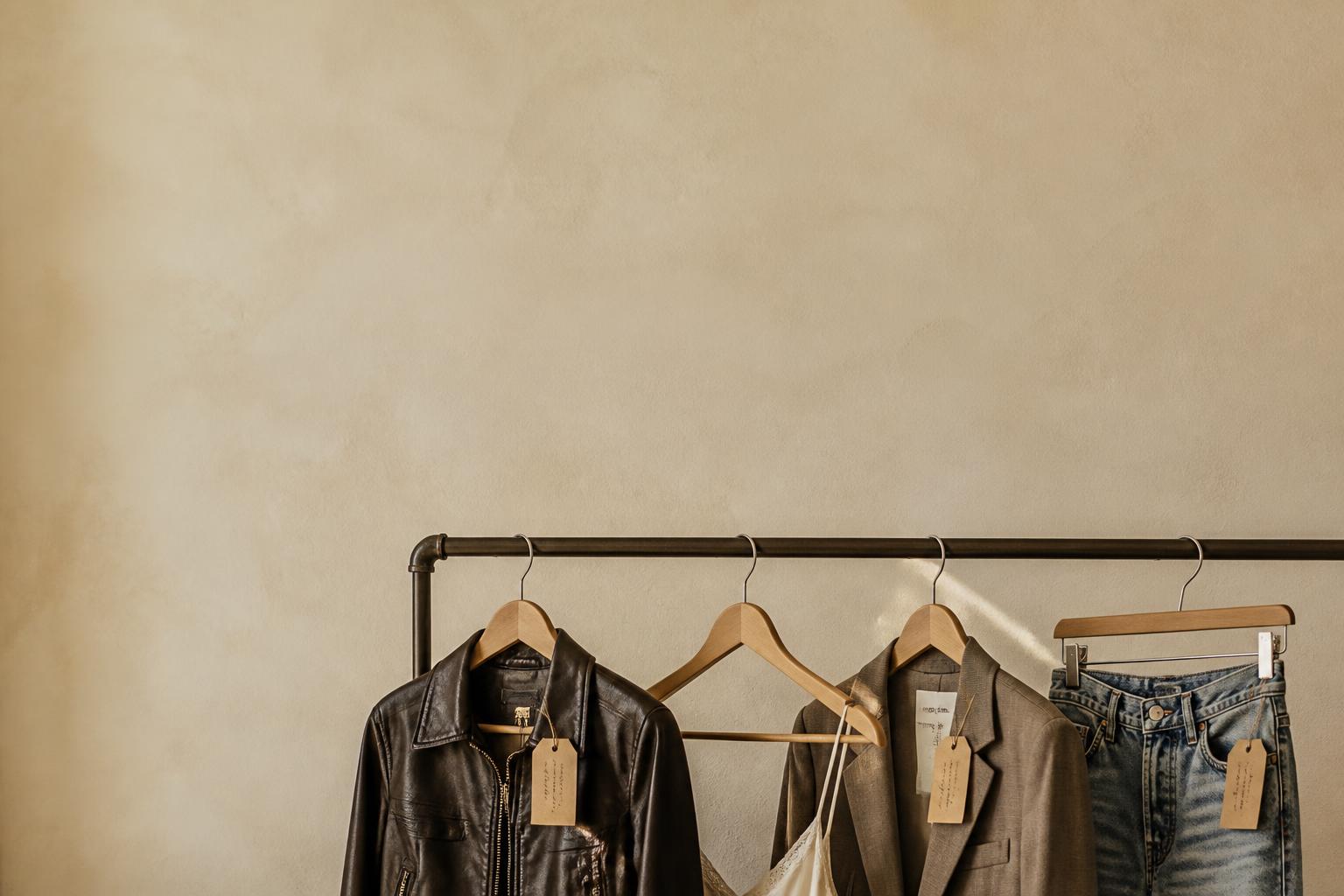
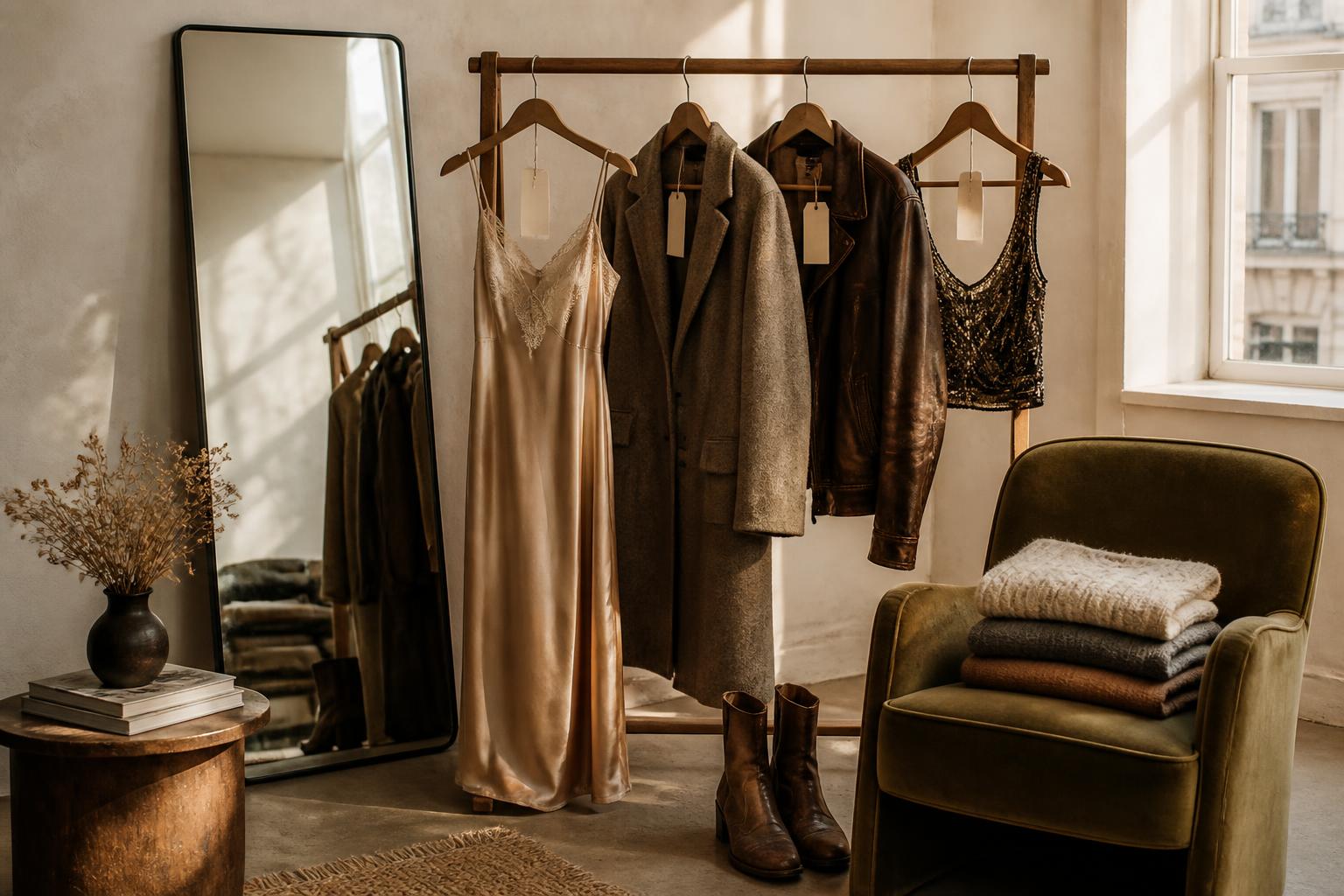
The line wrapped around the block twice. The shoppers had flown in. The seller sat on a chair with a toddler on her lap, blessing the pile-through. That was a New York Mother's Day weekend in 2023, when Chloë Sevigny opened her closet to the public alongside a handful of long-time fashion-world fixtures — and the closet sale stopped being a yard sale forever.
In the few years since, what was once a private ritual between friends has become one of the most-watched formats in fashion. Editors. Stylists. Substackers. Indie designers. Reality TV royalty. Independent creators with five-figure followings. They have all run some version of the same thing: a curated public sale of their own clothes, treated less like a clear-out and more like a release.
This piece is a closer look at how that shift happened, why the format is suddenly everywhere, what it tells us about how people want to shop in 2026 — and how any creator can run a closet sale with the same shape, even without a headline.
Turn this guide into your next drop.
What changed: from drop-off to drop
For a long time, the way a famous person's closet emptied was anonymous. A trusted assistant carried garbage bags to a consignment shop. A few credit notes came back. Pieces were resold to strangers who, unless they were prepared to do unusual amounts of detective work, would never know whose closet the piece had come out of. The provenance disappeared at the door.
The new closet sale inverts that. The seller stays in the room — literally, in the in-person version; symbolically, in the online one. Each piece comes with a story: where it was worn, why it is leaving, what it meant. The story is not a flourish. It is the product.
That single shift, from anonymous consignment to public, narrated drop, is what separates the new closet sale from the old one. It is also what made the format suddenly compete with brand drops and runway shows for attention.
How it spread: editors, stylists, then everyone
Once a few high-visibility sellers proved the format worked, it spread through fashion's professional class first: editors, stylists, art directors, designers, longtime industry insiders whose closets read as a moving record of the last two decades. Their pieces sold not because the brands were necessarily rare, but because the styling, the era and the previous owner together made each piece feel like a small archival object.
From there, it travelled outward — to vintage curators with cult Substacks, to indie shop owners who began hosting friends' sales, to second-tier influencers, to first-time creators with a few thousand engaged followers and a clear point of view. By 2025, the closet sale had become a recognisable format with its own conventions: a tight edit, a defined window, a clear story per piece, real measurements, an honest price.
The mechanic was identical at every audience size. Famous or not, the structure travelled cleanly.
Why now: five forces behind the moment
Strip away the names, and the rise of the closet sale rests on five overlapping shifts in how people shop.
1. Provenance is the new product attribute
When two identical jackets exist on the market, the one that lived in someone's life sells faster. Where it came from, who wore it, what it meant — these used to be invisible. Now they are the listing.
2. Parasocial closeness has a value
Followers spend hours a week with the people they follow. Buying a piece out of that person's closet is the most direct form of connection commerce has invented since signed prints. It is small, but it is real.
3. Vintage went mainstream
A generation that buys secondhand without apology has made vintage and resale categories the default rather than the alternative. A closet sale lands in a culture that is already there.
4. The taste filter shifted
Algorithm-curated feeds wore out their welcome. A person — one person — choosing 30 pieces feels more valuable than infinite filtering. The closet sale is, at its core, a human edit.
5. Tooling finally caught up
Spreadsheets and DMs are how the format started. Dedicated creator-closet tools are how it scales. Once one person could run their own closet end to end — listings, link, follows, drops, analytics, payments — the format stopped depending on a friend with a spreadsheet.
Anatomy of a closet sale that actually works
The headline sales look elaborate; the structure is simple. The same shape appears at every scale.
- A tight, ruthless edit — usually 25–60 pieces, not 200.
- A clear theme or era — one decade, one closet, one chapter of someone's life.
- A consistent shoot — one background, one light, one angle, so the closet reads as a collection.
- Honest listings — brand, era, size, real measurements, condition, why the piece is leaving.
- A defined window — "opens Friday at 7pm, closes Sunday" — that creates honest scarcity.
- Real interaction — saves, follows, requests and a follow-up plan with buyers, not a one-way push.
- A repeatable rhythm — the second drop earns more than the first, because the audience compounds.
IRL versus online: same format, different ceiling
In-person sales have a high upside and a hard ceiling. They are intimate, dramatic and unforgettable, but they require a city, a venue, a queue and a single afternoon of the seller's attention. They reward sellers who already have an audience that will travel.
Online closet sales travel without the seller having to. They reach buyers in other cities, capture demand outside an open hour, and leave a public closet behind that can be reopened any time. They are how almost every creator below A-list scale should run their first sale — and how A-list sellers extend the reach of an in-person event beyond the room.
The strongest sellers do both. A small in-person event for community. A public online closet for everyone else.
How any creator can run a closet sale with the same shape
You do not need a press cycle to use this format. You need a closet worth editing, a real link, a defined window and a way to capture interest. Practically:
- Edit first, shoot second. Walk your closet with a single rule: would a stranger want this, not knowing me?
- Aim for 25–40 strong pieces. Quality of edit is what makes the closet feel like a collection.
- Shoot all of it in one session. Same background, same light, same angle.
- Write each listing as if it were a real product page: brand, size, measurements, condition, era, story.
- Set a window. Even "opens Thursday, closes Sunday" is enough to create the small urgency the format runs on.
- Tell the story per piece. The provenance is not optional — it is the value. Where you wore it. Why it is leaving.
- Capture interest before you ship. Saves and requests are real demand data and tell you what to keep editing toward.
- Plan drop two before drop one closes. Closets compound; one-off sales do not.
Turn this guide into your next drop.
What brands and retailers can read into this
The closet sale is not a threat to brands. It is a buyer behaviour brands can learn from or keep losing share to. The honest lessons:
- Curation beats catalogue. Smaller, narrated drops outperform sprawling collections in attention and sell-through.
- Provenance is a feature, not a footnote — even for primary retail.
- Resale and primary retail are converging. Buyers do not experience them as separate categories anymore.
- Creators with credible closets are a sharper signal of demand than focus groups.
- A co-curated drop with a respected creator closet — capsule, archive, or restock — usually outperforms a generic gifting deal.
Where Loovly fits into the closet sale moment
Most closet sales are being run on tools that were never designed for the format: a Stories link, a spreadsheet, a DM inbox, a payment app. That works for one drop. It does not work for the second, the third, the tenth. Loovly is built for the shape the format invented.
- One clean creator closet link for bio, Stories, TikTok and WhatsApp.
- AI-assisted listing drafts from your photos — title, description, category and size hint per piece.
- A public creator closet with real product listings, not screenshots.
- Save, follow, request and share actions on every piece — real buyer interest, not buried DMs.
- Shareable product and closet links that work across every platform.
- Drop alerts so each new drop starts with the audience the last one earned.
- Creator analytics and demand signals you can use for the next edit or a brand pitch.
- A referral loop that turns existing buyers into the closet's best marketing channel.
- External payment links for eligible Creator Business users — handled outside Loovly, between the creator and the buyer.
A note on external payments: when an external payment link is used, the payment itself happens off Loovly, between the creator and the buyer. Loovly organises the listing, the link, the interest and the closet — it does not protect off-platform payments. Decide refund and dispute terms with the buyer up front.
Where this goes next
The closet sale moment is not a costume the industry is wearing for a season. It is the early form of a structural shift: shopping organised around people instead of catalogues. The creators treating their closet as a recurring publication, the brands that learn to collaborate with those closets, and the platforms that build for one-to-many resale will define how the next five years of retail feel.
The yard sale never went away. It just got a public link, a defined window and a story attached to every piece.
Turn this guide into your next drop.
Frequently asked questions
When did closet sales start trending?⌄
The post-pandemic version is widely traced to 2023, when a small group of fashion-world insiders ran very public sales that drew lines around the block. Editors, stylists and influencers followed quickly, and by 2025 the format had its own conventions and a steady stream of creator-led sales every weekend.
Do I need to be famous to host a closet sale?⌄
No. The format works because of its structure — a tight edit, a defined window, honest provenance and a way to capture interest. A small, engaged audience with a real link consistently outperforms a much larger audience selling from DMs.
What sells best in a creator closet sale?⌄
Pieces with a clear story (where they were worn, why they are leaving), middle-of-the-market sizing, recognisable brands in honest condition, and true vintage in great shape. Damaged or heavily worn pieces rarely move and can hurt seller reputation.
Should my first closet sale be in person or online?⌄
Online for almost everyone, at least at first. It reaches buyers outside one city and one afternoon, captures interest beyond an open hour, and leaves a public closet behind you can reopen. A small in-person event can come later, once the audience exists.
How is a creator closet different from a generic resale app?⌄
A resale app drops your piece into a feed with millions of others, where it competes on price and search. A creator closet keeps everything on one page, attached to one person's taste and story. That curation is the entire point of the format.
How do payments work on Loovly?⌄
Creators can list and share for free. Eligible Creator Business users can attach external payment links to listings. Those payments are handled outside Loovly, between the creator and the buyer, and Loovly does not protect off-platform payments. See the pricing page for current details.
Is Loovly free?⌄
Yes — you can open a Loovly closet for free and list pieces without a subscription. Paid plans unlock additional creator tools.
Ready to host your own closet sale?
Set up your free Loovly closet in minutes — one link, real measurements, and a checkout your audience can actually use.