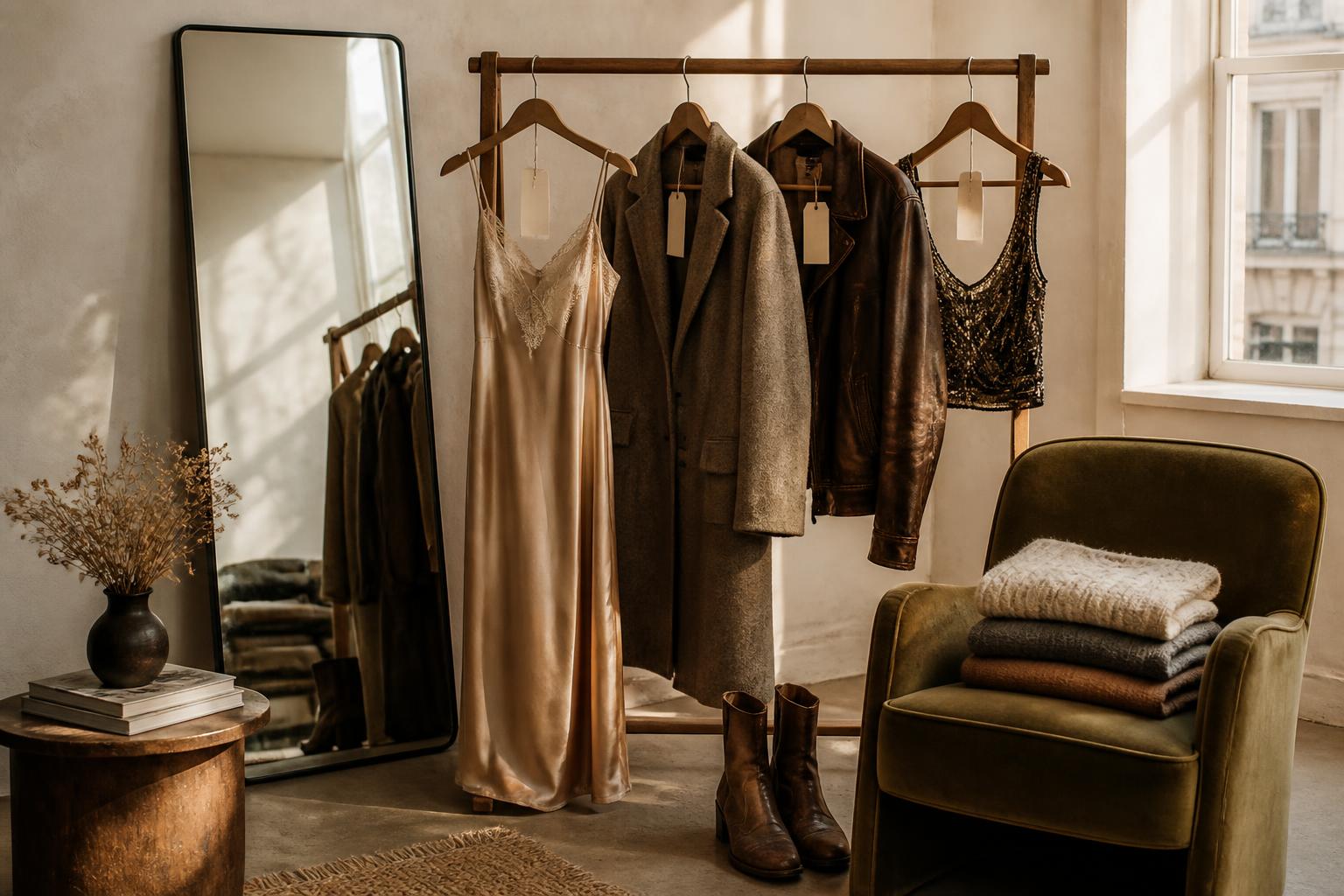
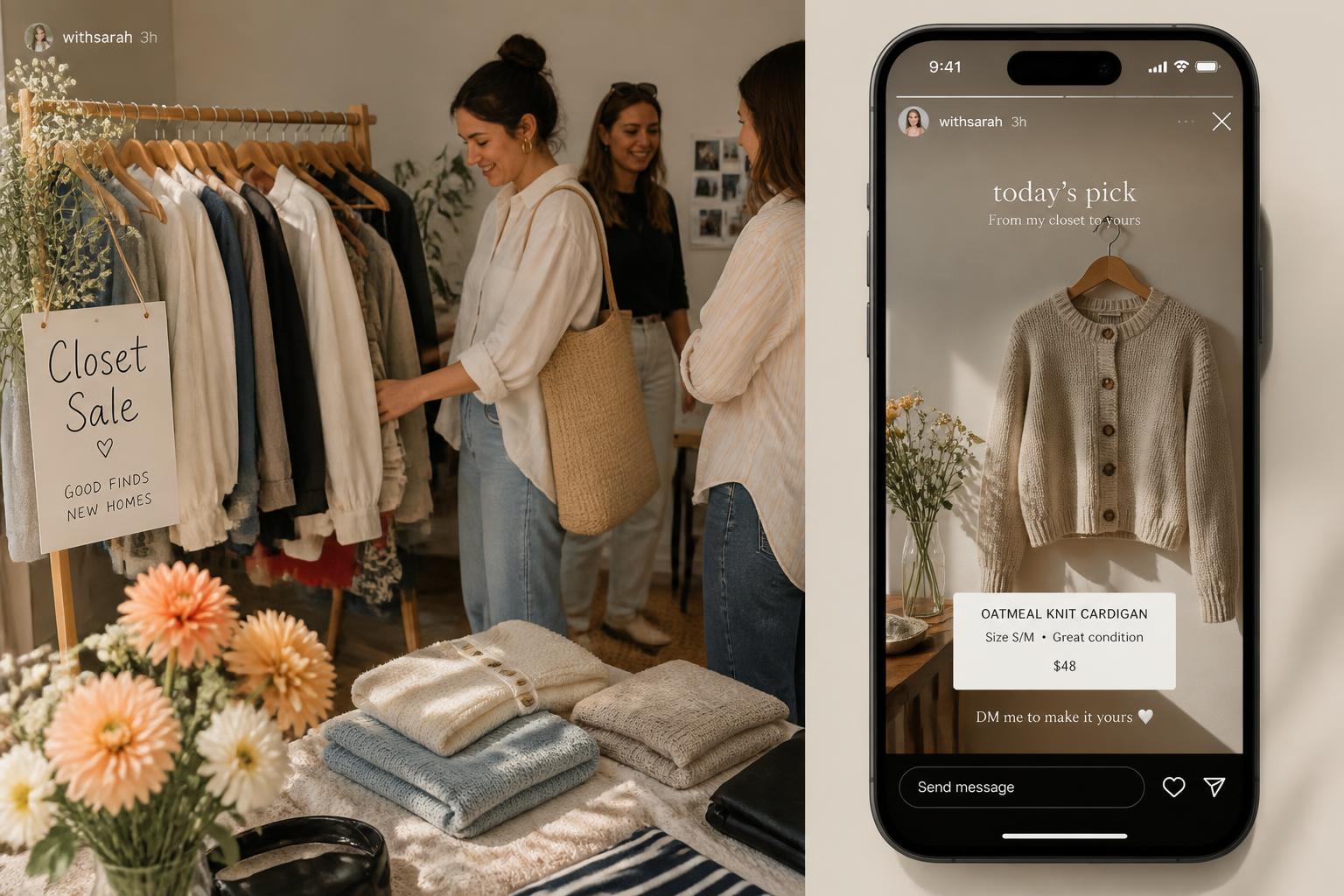
A closet sale is one of the most personal — and most fun — ways to give your wardrobe a second life. Whether you set up a clothing rack on your stoop with friends or run a Sunday-night story sale from your couch, the workflow is the same: curate, photograph, price, share, and ship. This guide walks you through both formats end to end, so you can pick the one that fits your style, your audience, and the season.
Written for creators, microcreators, stylists, vintage sellers, and anyone with a closet worth resharing.
Turn this guide into your next drop.
IRL vs online closet sale: which one is right for you?
Both formats can work brilliantly. The right one comes down to where your audience is, how much inventory you have, and how much time you want to spend on logistics.
| IRL closet sale | Online closet sale | |
|---|---|---|
| Best for | Local friends, community, in-person vibes | Followers anywhere, story shoppers, repeat drops |
| Setup time | Half a day on the day | One photo session + listings |
| Reach | Walk-ins + invited friends | Anyone with the link |
| Payments | Cash, Zelle, Venmo, QR codes | Direct messages, payment links, e-transfer |
| Shipping | None — buyers walk away with it | You ship every order |
| Best season | Spring–early fall, weekends | Year-round, especially evenings |
Many creators do both: a once-a-season IRL event for community, plus a regular online closet that runs all year. Loovly is designed for that hybrid — your public creator closet lives at one shareable link, so anything that doesn't sell at the IRL event has a clean second life online.
Step 1: Plan the sale before you touch a single hanger
The hardest part of any closet sale is starting. Block out a quiet evening, put a long playlist on, and walk through your wardrobe once — top to bottom.
Sort everything into four piles
- Sell — pieces in good condition that you no longer wear.
- Repair — items that need a button, hem, or steam before they're ready.
- Keep — things you reach for at least once a season.
- Donate or recycle — anything stained, broken, or unsellable.
Then organize the “Sell” pile by category: tops, dresses, denim, knitwear, outerwear, shoes, bags, accessories. Categories make pricing and photographing later much faster.
Light-clean every piece
Nobody wants to buy a fragrant memory. Wash, steam, or at minimum air-dry pieces in the sun. Replace missing buttons, lint-roll knits, and polish leather. Five minutes per item adds real perceived value.
Step 2: Host a great IRL closet sale
In-person sales are about atmosphere as much as inventory. People come for the pieces, but they stay for the experience.
Pick the right location
- Your stoop, balcony, or front yard — share the address by DM only.
- A friend's apartment or backyard with good light.
- A flea market or craft market with a table reservation.
- A local cafe, studio, or boutique willing to co-host.
Pick somewhere easy to reach by transit, close to a café, and shaded enough that buyers want to linger.
Co-host with two or three friends
Multi-seller sales always feel busier and serve a wider range of sizes and styles. Three sellers with different closets is the sweet spot — enough variety, still curated.
Promote the date, not the address
Announce the sale one to two weeks in advance with a clear date, time window, neighbourhood, and a sample of hero pieces. Ask people to DM you for the exact location. This protects your safety and creates a soft RSVP signal.
Set up like a pop-up shop
- One clothing rack, plus a folded stack table or a blanket on the ground.
- Hangers in matching wood or wire — not the wire hangers from your dry cleaner.
- A small mirror, a measuring tape, and a clip-on light for late-afternoon shoppers.
- A speaker with a low, easy playlist.
- Fresh flowers, a candle, snacks, or sparkling water — small touches that make people stay.
- A printed price tag system or a “most items $X, all denim $Y” sign.
Make payment frictionless
- Cash float with small bills for change.
- Two payment apps with QR codes printed and propped up.
- A note pad to log who bought what (helpful for splitting earnings with co-hosts).
- Tote bags or paper bags for buyers to walk away with.
Pro tips for IRL sales
- Use a suitcase to transport heavy piles of clothing on transit.
- Set a rain date if you're outdoors and announce it on the listing post.
- Keep one curated rack of “hero pieces” at eye level — they pull people in.
- Drop prices in the last hour. Almost everything left turns into a quick sale.
Step 3: Run a great online closet sale (story sale or drop)
Online sales reach further, run longer, and let you sell to anyone who follows you. The trade-off is that you ship every piece and answer every DM — so structure matters.
Photograph everything in one short session
- Pick a single backdrop — a white wall, a neutral curtain, or a wood floor.
- Shoot in daylight, near a window, with the light to one side.
- Front, back, and a fabric close-up for every piece.
- Optional but powerful: one styled-on-body shot per hero piece.
- Photograph any flaws honestly — small holes, missing buttons, deodorant marks.
If you list on Loovly, the AI-assisted listing flow drafts a title, description, category, and size hints from your photos so you only have to review and edit — not start from a blank page.
Always include measurements
S/M/L means almost nothing in resale. Provide pit-to-pit, length, waist, hips, and inseam where relevant. It cuts return requests in half and makes buyers feel safe.
Price with intent
Consider age, brand, condition, and what your audience expects to pay. A rough resale benchmark:
| Condition | Suggested resale range |
|---|---|
| New with tags | 40–60% of retail |
| Worn once or twice | 30–45% of retail |
| Gently used | 20–35% of retail |
| Well-loved | 10–25% of retail |
| Vintage or rare | Price by demand |
Offer a bundle discount (e.g. 10% off two pieces) and accept respectful offers. Drop prices publicly after the first week — it becomes its own “last call” moment.
Pick the right channel
- A story sale on Instagram or TikTok — fast, social, time-boxed.
- A creator closet link in your bio that runs continuously.
- Both — story sale to drive a rush, closet link to catch everyone else.
A story sale is great for momentum; a creator closet page is what holds your inventory together between drops. Loovly is built around that closet link: one URL, product pages with measurements, save and follow buttons, request-this-item for sold pieces, and drop alerts when you publish new stock.
Set clear rules on the first slide
- First DM gets it.
- Payment within a set time window (e.g. 24 hours) or it goes to the next buyer.
- Shipping costs and rough timing.
- Whether you accept offers, bundles, or holds.
- Refund policy in one sentence.
Send everything to one link
The fastest way to lose a sale is to bury your buyer in DMs and screenshots. Whatever you use, pick one place for the sale to live and send every story, Reel, and caption to that link. A clean public creator closet is the easiest version of this.
Step 4: Ship cleanly and follow up
- Use recycled mailers and tissue paper — buyers notice.
- Add a small extra: a sticker, a swatch, a thank-you card.
- Send the tracking number the moment you drop off.
- Message the buyer when it ships and again to check it arrived.
For eligible Creator Business users, Loovly supports external payment links on product pages. When a buyer chooses an external payment link, the actual payment happens between you and the buyer, outside Loovly. Loovly organizes the sale, the listing, the interest, and the link — it does not process or protect off-platform payments. Always pick a payment method you and your buyer both trust.
After the sale: turn signals into your next drop
Every sale leaves a trail. Which pieces sold first? Which got the most saves, follows, or DMs but no buyer? Which categories sold out completely? Save the answers — they tell you what to look for in your closet next time and what to pitch to brands.
Loovly surfaces this automatically through creator analytics and demand signals on every closet and product, so you can see exactly which pieces, sizes, and price points are working.
Turn this guide into your next drop.
Frequently asked questions
What is a closet sale?⌄
A closet sale is a personal sale of clothes, shoes, and accessories from your own wardrobe — either in person (often with friends co-hosting) or online through Instagram stories, a creator closet link, or a resale platform. It usually focuses on curated, well-loved pieces rather than bulk secondhand.
How do I host a closet sale online?⌄
Sort your closet, photograph every piece in one short session against a clean backdrop, include real measurements, set honest prices, and send all of your traffic to one link. Loovly makes this easier with AI-assisted listing drafts, a public creator closet, save and follow actions, and drop alerts.
How do I host a closet sale in person?⌄
Pick an accessible location, co-host with two or three friends for variety, announce the date one to two weeks in advance, set up like a small pop-up with a rack, mirror, music, and a clear payment system, and only share the exact address by DM.
How should I price closet sale items?⌄
Compare to resale, not retail. New with tags usually sells at 40–60% of retail, gently used at 20–35%, and well-loved pieces at 10–25%. Vintage and rare pieces should be priced by demand. Drop prices publicly after the first week if a piece has not moved.
What measurements should I include?⌄
At minimum, include pit-to-pit, length, waist, hips, and inseam where relevant. Don't rely on S/M/L alone — sizing varies wildly across brands and decades, and measurements drastically reduce return requests.
How do I get paid for an online closet sale?⌄
Most creators use a mix of payment apps (Zelle, Venmo, Wise, Revolut, bank transfer) or a dedicated payment link. For eligible Creator Business users, Loovly supports external payment links on product pages — those payments happen between you and the buyer, outside Loovly.
Do I need a big following to run a closet sale?⌄
No. A small, engaged audience usually outperforms a large, passive one. A clear date, a single link, good photos, and a focused edit of 20–40 pieces is usually enough to make either an IRL or online sale feel busy.
What should I do with pieces that don't sell?⌄
Leave them on your closet link at a lower price, bundle them with a hero piece, save them for the next drop, or donate and recycle anything that has been sitting too long. Unsold pieces are still useful data — they show which categories and sizes to adjust next time.
Ready to host your own closet sale?
Set up your free Loovly closet in minutes — one link, real measurements, and a checkout your audience can actually use.