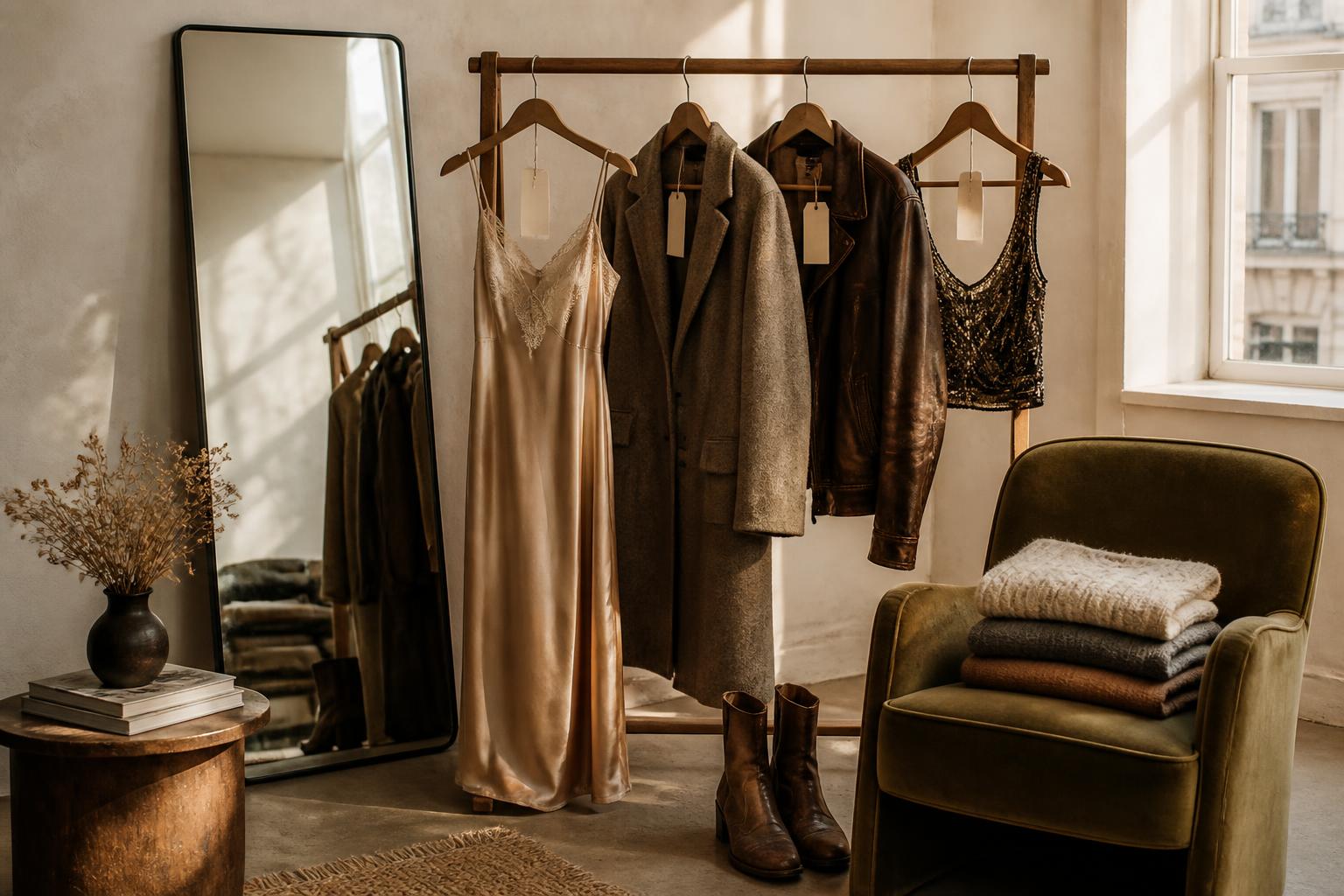
Closet sales aren't a new format. People have been selling their old clothes since they've had clothes to sell. What's new is the way these sales feel — curated, personal, communal, and quietly aspirational. A folding rack outside a vintage store can pull a line that wraps around the block, not because the prices are unbelievable, but because the closet behind them belongs to someone whose taste people already trust.
This guide unpacks why closet sales are having such a moment, what they say about the way fashion is being bought today, and how creators can carry that same intimacy into a closet that lives online.
Turn this guide into your next drop.
What a closet sale actually is in 2026
A closet sale is a curated, time-bound resale of one person's wardrobe. It's run by an individual — a stylist, a writer, a model, a fashion-adjacent creator — rather than a brand. Each piece carries a story: worn to a show, gifted by a designer, packed for a memorable trip, lived in for a season and then handed on.
It can take three forms — and increasingly, the same person runs all three:
- An IRL pop-up at a vintage shop, studio, or someone's living room.
- A story sale on Sunday night through a creator's stories and DMs.
- A permanent online closet — one shareable link where pieces drop, sell, and restock over time.
Why the moment, and why now
Several things changed at once. People are paying more attention to what they buy, where it came from, and how long it will last. Resale platforms made secondhand shopping normal. Newsletters and small communities made personal taste more powerful than algorithmic recommendations. And after a decade of fast fashion at warp speed, a quieter form of commerce started to feel modern again.
Closet sales sit perfectly inside that shift. They're sustainable without being preachy. They're social without being scripted. They are, more than anything, personal.
It's a who, not a how
The format is almost incidental. What makes a closet sale work is the person behind it. Shoppers come to meet someone whose taste they've followed for years, to leave with a piece that belonged to them, to put on a sweater that was on the body of someone whose Instagram they've watched evolve. The clothes are the artifact. The connection is the actual product.
Provenance you can feel
On a typical resale platform, you're trusting the seller and the platform's authentication process. At a closet sale, you can often scroll back and see the seller wearing the piece in a story or post. That kind of provenance is almost impossible to fake, and it pulls buyers in for reasons that have nothing to do with price.
Real prices, real access
Many of the most-loved closet sales price pieces deliberately within reach. The math is intentional: lower prices mean the sale moves quickly, more people leave with something, and the day feels like a community event instead of an auction. For the seller, it's less about maximizing profit and more about getting clothes into the hands of people who'll actually wear them.
What creators are doing differently
The closet sales people line up for share a small set of traits. None of them require a famous name, but they all reward intention.
- A curated edit — usually 30 to 60 pieces, not a wardrobe dump.
- Pieces tied to recognizable content moments or specific personal stories.
- Honest pricing tiered to condition, not to ego.
- A clear date and venue, treated like a small release, not a clearance.
- A reason behind the sale: moving, downsizing, a charity component, an aesthetic shift.
The result is something closer to a gallery opening than a yard sale — which is exactly why the format has become aspirational in its own right.
Bringing the same intimacy online
Not every creator can host a NYC pop-up. Most don't want to. The good news: nearly everything that makes an IRL closet sale work translates to a well-built online closet — the curation, the story per piece, the time-bound drops, the personal connection between seller and follower.
An online closet sale just needs a different surface. DMs and grid posts aren't built for it. A dedicated creator closet is.
How an online closet preserves the magic
- Each piece becomes a real product page — photos, fit notes, the story behind it.
- Everything lives at one shareable closet link, easy to put in a bio, story, or message.
- Followers can save pieces, follow the closet, and request drop alerts.
- Buyer interest is collected in one place instead of buried in DMs.
- Demand signals show the creator which pieces and categories followers are quietly asking for.
How Loovly fits into this moment
Loovly is a creator closet platform built specifically for this kind of personal resale — story-worn pieces, gifted samples, and lifestyle staples passed on with care. A creator gets one public closet at a single shareable link. Pieces are added as real product listings, with AI-assisted draft descriptions from photos so the listing work doesn't eat the weekend.
Followers can save items, follow the closet, request specific pieces, and share individual products. Creator analytics surface quiet signals — which categories are getting the most interest, which drops people are coming back for — so a closet evolves with its audience instead of guessing. Eligible Creator Business users can attach external payment links to specific products; those payments are handled outside Loovly by the payment provider the creator chooses.
The point isn't to replace the IRL sale. It's to make the same kind of personal, story-rich, community-led closet sale possible without renting a venue, building a website, or living in your DMs.
What this means for brands
Brands paying attention will notice something important in this trend: the audience following a stylist, writer, or microcreator is not just a marketing surface. It's a real shopping community with strong opinions about what they'll wear. That makes creator closets — and the discovery loops around them — one of the most honest signals of what's actually being worn, kept, and resold.
Loovly's brand layer is built around that signal, with creator-led product discovery and an affiliate-style ecosystem that lets brands show up in places real shoppers already trust. No paid lookbook required.
Starting your own — small, curated, calm
If the trend has you thinking about your own closet, start small. Pick 30 to 50 pieces you genuinely loved, photograph them in daylight against a clean background, write a sentence per piece, and put them on a single closet link you can share once. Tell the people who already follow you. See who comes back.
Closet sales are having a moment because they bring fashion back to a human scale. That moment isn't going anywhere — it's just spreading from a vintage shop in downtown Manhattan to wherever your closet, and your followers, already live.
Turn this guide into your next drop.
Frequently asked questions
Why are closet sales suddenly popular again?⌄
A mix of factors: more interest in secondhand fashion, fatigue with fast fashion, the rise of newsletter and microcreator culture, and a desire for shopping experiences that feel personal instead of algorithmic. Closet sales sit at the intersection of all of that.
Do you need to be famous to host a closet sale?⌄
No. The format rewards curation and intention more than scale. A small, well-edited closet sale from someone with a few hundred engaged followers can land beautifully — especially online, where the audience isn't bound by geography.
How is a closet sale different from a regular resale listing?⌄
It's curated, time-bound, and tied to a specific person. Each piece carries context — who wore it, when, and why it's leaving — instead of being a faceless listing in a marketplace stream.
Can you run a closet sale fully online?⌄
Yes. An online creator closet captures most of what makes IRL sales work: curation, story, community, and a shareable link. It just trades the physical event for repeat, time-bound digital drops.
What kind of pieces do best in a creator closet sale?⌄
Pieces tied to recognizable content moments, gifted brand items followers already love, well-cared-for designer staples, and accessories. Anything with a story tends to move faster than a generic resale listing.
Ready to host your own closet sale?
Set up your free Loovly closet in minutes — one link, real measurements, and a checkout your audience can actually use.