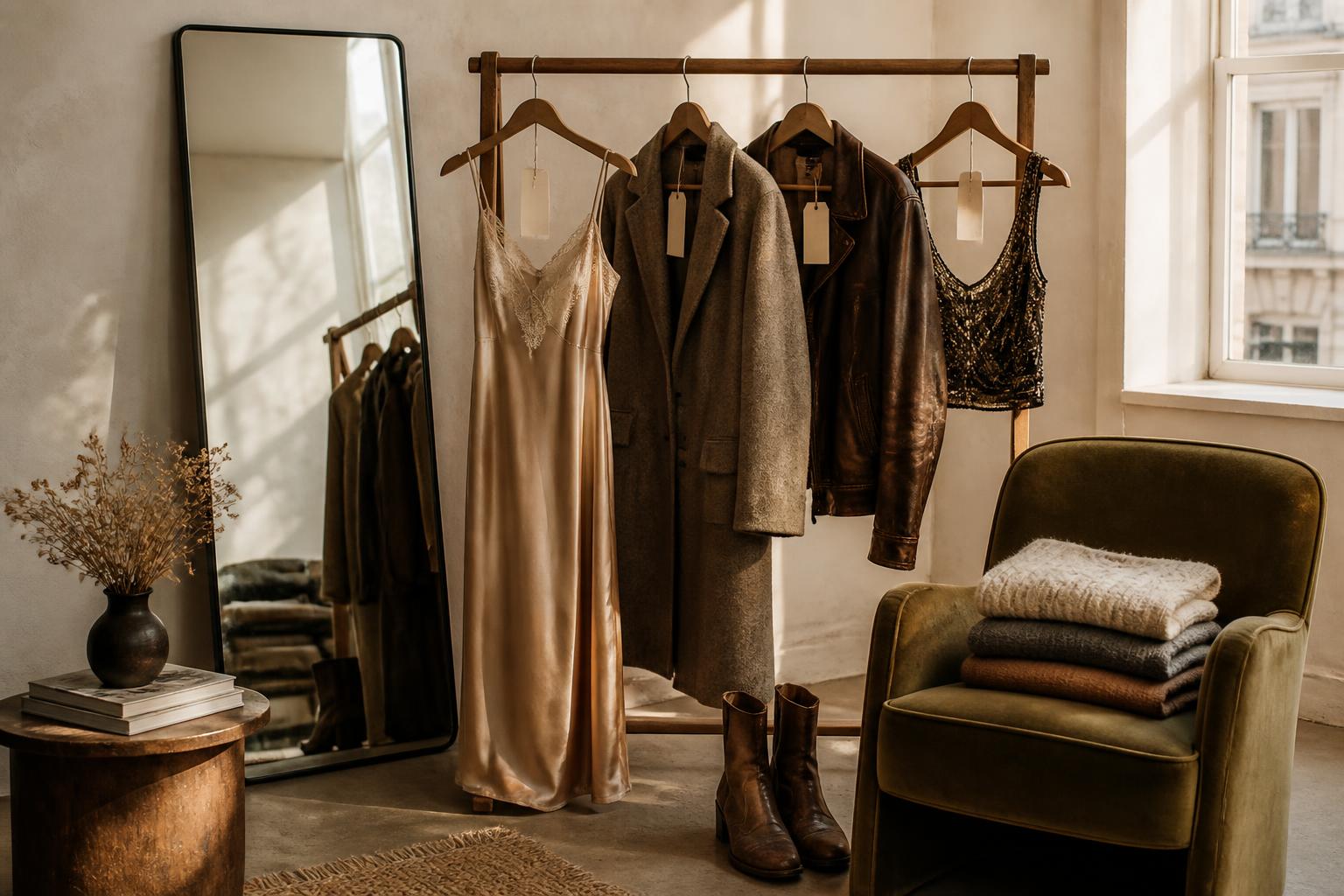
Almost every closet has something in it the owner believes is secretly worth a lot of money. The bridesmaid dress you'll never wear again. The designer bag you bought on holiday. The vintage jacket from a grandparent. The shoes that still have the price tag. The honest answer in 2026 is: yes, some of it is worth money — but rarely as much as you think, and the difference between a profitable closet edit and a frustrating weekend is knowing what to keep, what to sell, where to sell it and what to expect.
This is a realistic guide to what actually sells from your closet, what doesn't, what you can plausibly get paid for it, and how to turn a one-off clear-out into a closet that earns from itself.
Turn this guide into your next drop.
The reality check: what your closet is really worth
Resale prices are set by demand today, not by what you paid years ago. A €1,200 designer coat with light wear is closer to €250–€400 in 2026 — not €900. A €30 fast-fashion top with the tag still on usually sits at €5–€10. Mid-tier brand pieces hover around 20–35% of retail. Once you accept that, every decision downstream becomes simpler: what's worth photographing, what's worth donating, what's worth keeping.
There are two things that genuinely break this rule: scarcity and timing. Pieces in short supply (true vintage, archive seasonal items, sold-out collabs) and pieces aligned with a current trend (right now: 90s and Y2K oversized, late-90s minimal designer, true vintage 70s) can sell well above the average. Almost everything else lives in the realistic range.
What actually sells from a regular closet
Across creator closets, vintage shops and resale platforms in 2026, the patterns are consistent. Some categories move quickly with very little effort; others sit. Use this as your first filter when you walk your wardrobe.
Sells well
- True vintage from the 1970s and earlier — supply is finite and shrinking.
- Late-90s and early-2000s oversized and unisex pieces (jeans, blazers, knits).
- Recognisable designer pieces in great condition — bags, shoes, outerwear, knits.
- Quiet-luxury staples (cashmere, well-cut blazers, leather, denim).
- Niche or sold-out collabs and capsule drops with documented hype.
- Sizing in the middle of the market (roughly EU 36–42 / US 4–10) — the widest buyer pool.
Slow movers (price low or donate)
- Bridesmaid and formal occasion dresses — limited reuse.
- Cheap fast fashion with visible wear.
- Worn-out shoes and bags with damage to leather, soles or hardware.
- Trendy pieces from a trend that has clearly turned.
- Anything stained, pilled or stretched out of shape.
- Sentimental items only valuable to you.
If a piece doesn't fit either list, the deciding factor is condition. Mint condition almost always sells; visible wear shifts everything down a tier.
How much does it actually sell for?
These are realistic 2026 ballparks, not promises. Real prices depend on brand, condition, photos, audience and timing.
| Category | Realistic resale | Notes |
|---|---|---|
| Fast fashion, new with tags | 30–50% of retail | Beat full-price discounts to move. |
| Mid-tier brand, gently used | 20–35% of retail | Honest middle ground — moves with a good photo. |
| Designer, gently used | 25–45% of retail | Authentication and proof of purchase help. |
| Designer, archive or sold-out | 60–120% of retail | Hype and scarcity drive a premium. |
| Vintage, mint condition | Set by demand | Forget retail — the market sets the price. |
| Worn shoes / damaged items | Often €0 | Bundle or donate. |
| Consignment payout to you | 25–45% of sale price | Shops take the rest for the work involved. |
If you sell direct on a creator closet — your own social, your own link, your own buyers — you keep more of the price but do more of the work. Consignment trades a lower payout for less effort.
Where to actually sell what
There is no single best place to sell every piece. Match the piece to the channel.
True vintage and archive designer
Specialist vintage dealers and curated archive shops. They know the market, they have the right buyer, and they will be honest about whether a piece is worth their time. For very valuable pieces, auction houses make sense. If you sell direct, photograph everything against a clean background and write proper provenance notes — vintage buyers care.
Designer in good condition
Established designer resale platforms handle authentication and the buyer pool. Expect to be paid 25–45% of sale price after their cut. Faster than DIY, lower upside.
Mid-tier and everyday clothes
Generalist resale apps and your own creator closet. The trade-off is time: apps give you reach, your own closet gives you control and repeat buyers. For creators with even a small audience, your own closet usually outperforms generic apps over a few drops.
Bulk basics and low-value items
Mass consignment bag programmes are best for clearing volume you do not want to photograph individually. The payout per piece is low; the time spent is also low. Anything that does not sell is recycled or donated.
Damaged or end-of-life
Textile recycling and donation. Selling worn-out clothing rarely works and damages your reputation as a seller.
A simple decision matrix for every piece
Walk through the wardrobe once with these four questions per piece. Be honest.
- Have I worn it in the last 12 months?
- Is it in resellable condition (no stains, holes, broken zips, missing buttons)?
- Would a stranger want it without knowing me?
- Is there a real audience for this brand, era or size?
Two or more no's: donate, recycle or bundle. Three or more yes's: photograph it for the sale. Anything in between goes in a maybe pile to revisit at the end — that pile usually halves itself once you see the closet edited.
Turn this guide into your next drop.
Shoot and list like you mean it
The single biggest lever on resale price is the listing itself. The same jacket in a great photo with honest sizing sells for double the same jacket in a blurry mirror shot with no measurements.
- Shoot in daylight near a window or with one soft light.
- Use the same plain background and angle across the whole sale — the closet reads as a collection.
- Photograph any flaw close-up. Honesty earns repeat buyers.
- Include real measurements: shoulder, chest, waist, hip, length, sleeve.
- Name the brand, size, era and condition in plain language.
- If you list on Loovly, the AI-assisted listing flow can draft each title, description and category from your photo — so 30 pieces stop feeling like 30 separate captions.
Turn one sale into a closet that earns from itself
A one-off clear-out is fine. A creator closet is better. The same buyers who picked up a piece this season will buy again next season if you make it easy to find you again.
- Put every piece on one public closet link — not in DMs.
- Let buyers save, follow and request pieces, so demand is visible before you ship.
- Send drop alerts when you add new pieces, instead of starting from zero each time.
- Track what sold fastest, at what price and in what size — that's data for your next edit and for any brand you want to pitch.
- A referral loop turns happy buyers into your best marketing channel.
This is the part of resale most generic guides skip. Cash in your closet is not really a one-time thing — it's a quiet, recurring side income if you treat the closet as a small editorial project.
Where Loovly fits in
You don't need a platform to clear your closet. Honest pricing, good photos, the right channel and a real follow-up plan will get you most of the way there. Loovly just removes the friction the generic options don't solve:
- One clean public creator closet link for bio, Stories, TikTok and WhatsApp.
- AI-assisted listing drafts from your photos — title, description, category, size hint.
- Listings with size, measurements, condition and clear pricing.
- Save, follow, request and share actions on every piece.
- Buyer interest collection so you see real demand before shipping.
- Drop alerts to followers when new pieces go live.
- Shareable product and closet links that work across every platform.
- Creator analytics and demand signals you can use for the next drop or a brand pitch.
- A referral loop so existing buyers bring new ones into your closet.
- External payment links for eligible Creator Business users — handled outside Loovly, between you and the buyer.
A note on external payments: when you use an external payment link, the payment itself happens off Loovly, between you and the buyer. Loovly organises the sale, the listing, the interest and the link — it does not protect off-platform payments. Decide your refund and dispute terms with your buyer up front.
Turn this guide into your next drop.
Frequently asked questions
Is it really worth selling clothes from my closet?⌄
For most people, yes — but on a realistic scale. A focused edit of 20–40 strong pieces usually outperforms a closet of 200 mid pieces, both in money earned and time spent. Treat it as a recurring side income from your wardrobe, not as a windfall.
How much can I expect to get for designer items?⌄
Most gently used designer pieces resell for roughly 25–45% of retail. Archive, sold-out or hype pieces can sit above retail. Consignment platforms take a cut, so your payout will be lower than the listed price.
What sells best from a regular closet in 2026?⌄
True vintage, late-90s and early-2000s oversized and unisex pieces, quiet-luxury staples, recognisable designer in great condition, and middle-of-the-market sizing. Condition is the deciding factor on almost everything else.
What's not worth trying to sell?⌄
Damaged or heavily worn pieces, cheap fast fashion with visible wear, bridesmaid and formal occasion dresses, off-trend trendy pieces, and items that only have sentimental value to you. Donation or textile recycling is usually the right call.
Where should I sell my clothes?⌄
Match piece to channel. True vintage and archive designer go to specialist dealers or auction. Standard designer goes to authentication-led resale platforms. Mid-tier and everyday clothing performs best on your own creator closet or on generalist resale apps. Bulk basics fit consignment bag programmes.
Can I really run my own creator closet without a big audience?⌄
Yes. Most successful creator closets started with a few hundred engaged followers and a clear drop schedule. A real link, honest sizing and consistent photos matter more than follower count.
How do payments work on Loovly?⌄
Creators can list and share for free, and eligible Creator Business users can attach external payment links to listings. Those payments are handled outside Loovly, between you and the buyer, and Loovly does not protect off-platform payments. See the pricing page for current details.
Is Loovly free?⌄
Yes — you can open a Loovly closet for free and list pieces without a subscription. Paid plans unlock additional creator tools.
Ready to host your own closet sale?
Set up your free Loovly closet in minutes — one link, real measurements, and a checkout your audience can actually use.